Most Fargo homeowners never think about insulation until a room won’t warm up or a heating bill comes in ugly. That’s the problem — insulation fails quietly, and in Climate Zone 7 a house that was comfortable ten years ago can slowly turn drafty and expensive without anything obviously “breaking.” If you’re wondering whether yours is done, here’s how to tell.
Short version: Old insulation is worth replacing when it has settled, gotten wet, grown moldy, been chewed up by pests, or was simply never enough for North Dakota’s climate to begin with. The clearest real-world tells are cold rooms and cold floors, rising heating bills, ice dams, drafts, and frost or staining in the attic. In most Fargo homes the fix isn’t just adding more fluff — it’s air-sealing and replacing the failed material, which is where spray foam earns its cost.
The everyday signs you can feel
You don’t need a thermal camera to catch most insulation failures. The house tells you:
- Cold rooms and cold floors. One bedroom that never keeps up, or floors over a crawl space or garage that stay icy all winter, usually mean the insulation there has settled, gapped, or was skimpy from the start.
- Heating bills creeping up year over year. A furnace working harder to hold the same thermostat setting is often heating air that’s leaking straight out through a tired envelope.
- Drafts near outlets, baseboards, and windows. Air movement means the air barrier is gone — and fiberglass batts were never much of one.
- Ice dams and roof-edge icicles. Warm air leaking into the attic melts the snow on your roof, which refreezes at the cold eaves. That’s an insulation-and-air-sealing failure, not a gutter problem — we go deep on it in our piece on attic air-sealing and ice dams.
The signs hiding in the attic and basement
The attic is where insulation ages worst, and where the evidence is easiest to read once you look. Blown-in cellulose and fiberglass settle over the years — that R-49 someone installed in 1998 may be compressed to a fraction of it now. Look for matted, discolored, or damp insulation, frost or dark staining on the sheathing and nails in late winter, and rodent runs or nesting that crush and contaminate the material. Down in the basement or crawl space, sagging batts falling off the rim joist or a musty smell point to insulation that’s absorbing moisture instead of stopping it.
Any of these means the material isn’t just underperforming — it’s failed, and adding more on top of it rarely helps.
Why “just add more” often doesn’t work here
The instinct is to blow another layer over what’s there. Sometimes, in a simple vented attic, that’s fine. But in Climate Zone 7 the thing wrecking most homes isn’t a low R-number — it’s air leakage, and piling insulation over a leaky ceiling buries the problem without fixing it. Warm, humid indoor air keeps pushing up through the fluff, hits the cold roof deck, and condenses. That’s the same building-science trap we describe in spray foam vs. fiberglass in a cold climate: the air-sealing is half the value, and old fiberglass provides almost none.
If the existing insulation is wet, moldy, or pest-damaged, it also has to come out — you can’t seal contamination inside a wall or attic and hope.
When replacement is the right call — and what it looks like
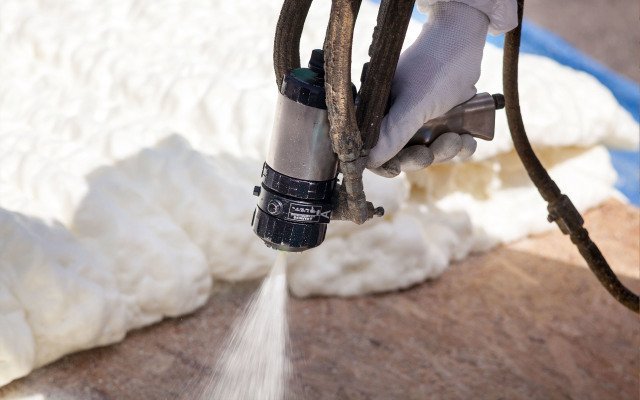
Replacing insulation is worth it when the old material is failed and the house has a comfort or cost problem you’re tired of living with. In practice that usually means removing the spent insulation and rebuilding the envelope with a material that seals as it insulates. Attic insulation with spray foam at the deck or floor stops the air leakage and the ice dams in one step; wall insulation retrofits close the drafts you feel at the baseboards. The payback shows up on the bill — the leaks you close are the same ones covered in where your heating bill leaks through a Fargo winter.
We see this constantly in the older housing stock across Fargo, West Fargo, and Moorhead, where 1960s–1990s homes are running on original, settled insulation that never met today’s Zone 7 standard.
Not sure if yours is worth replacing or just topping up? Request a free quote and we’ll inspect the attic, walls, and rim joists, tell you honestly what’s failed versus what’s fine, and spec the fix in real numbers for your home.