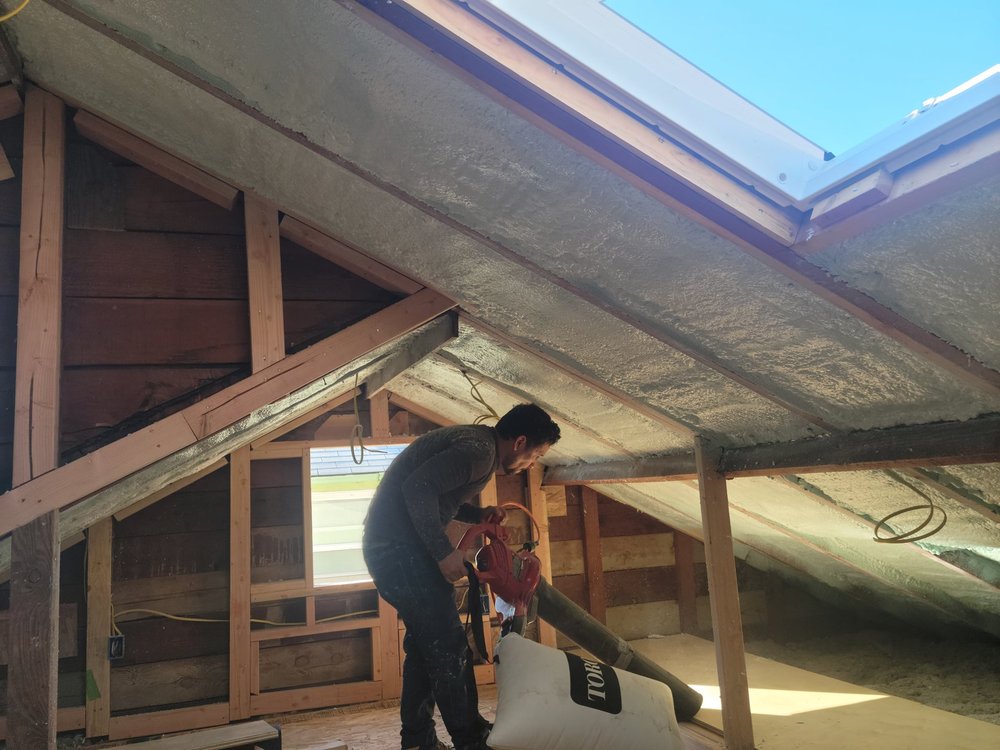
It’s one of the most common questions we get from Fargo homeowners once they start reading about spray foam: “If I foam the attic, don’t I still need it to breathe? Won’t sealing the vents cause moisture problems?” It’s a fair worry — everyone’s been told an attic needs ventilation — but the answer flips once you understand what the foam is actually doing.
Short version: No — when you spray foam the underside of the roof deck, you deliberately stop venting the attic. That’s an “unvented” or “conditioned” attic, and it’s a proven cold-climate assembly. You seal the soffit and ridge vents, bring the attic inside your home’s air and temperature envelope, and the foam’s air seal is what keeps moisture out. What you must not do is mix the two: leaving soffit vents open under a foamed roof, or half-sealing, is what actually causes moisture trouble in Climate Zone 7.
Why normal Fargo attics need vents in the first place
A traditional attic is outside your home’s envelope. The insulation sits on the flat attic floor, and cold outdoor air is invited in through soffit vents and out the ridge. That airflow does one job: it keeps the roof deck cold and dry so any moisture that sneaks up from the house gets carried away before it can condense and rot the sheathing. In that design, ventilation is essential — because the attic is meant to be cold.
The catch in Fargo is that a vented attic only works if the ceiling below it is airtight. Every Zone 7 winter, warm humid house air pushes up through top plates, wiring holes, and bath fans — the leakage behind ice dams and attic frost. Ventilation is partly there to manage the moisture those leaks let in.
The unvented attic: sealing the vents on purpose
Spray foam takes the opposite approach. Instead of insulating the floor and venting the space, you spray closed-cell foam against the underside of the roof deck and seal the soffit and ridge vents shut. Now the attic is inside the envelope — roughly the same temperature and humidity as the rest of the house. There’s no cold roof deck for moisture to condense on, because the foam is bonded right to the sheathing and keeps it above the dew point. It’s the same assembly as a cathedral-ceiling hot roof, just on a flat attic instead of a sloped one — and it’s why closed-cell is the pick in a cold climate.
This is why an attic insulation job that uses roof-deck foam doesn’t need — and can’t use — the old vents. The air seal replaces the airflow. Homeowners across Fargo, West Fargo, and the surrounding towns choose it specifically to bring ductwork, HVAC, and storage into conditioned space.
The mistake that actually causes moisture problems
The danger isn’t sealing the vents — it’s doing it halfway. In Zone 7, watch for:
- Leaving soffit vents open under a foamed roof. Now you’ve got cold outdoor air washing one side while conditioned air sits inside — a recipe for condensation. Commit to unvented or stay fully vented; don’t blend them by accident.
- Too little foam. A thin flash of closed-cell leaves the sheathing too cold. Zone 7 needs enough thickness to keep the deck warm and to act as its own vapor control — spec it in inches, in writing.
- Open-cell alone against the deck. Open-cell lets vapor through to the cold sheathing without added vapor control. It has its uses, but not bare against a cold-climate roof deck.
Done right, an unvented foamed attic is one of the driest, most stable parts of a Fargo home. Done halfway, it traps moisture — which is where the “spray foam causes mold” horror stories come from.
So, do you need ventilation or not?
If you keep insulation on the attic floor, yes — keep the soffit and ridge vents working. If you foam the roof deck, no — you seal the vents, and the foam does the job ventilation used to. The wrong answer is the in-between one. Which path fits depends on your roofline, whether you’ve got HVAC up there, and your history with ice dams and frost.
Wondering which attic type your house should have? Request a free quote and we’ll look at your roof, your ductwork, and your moisture history, then tell you straight whether a sealed foam roof or a vented, air-sealed floor is the smarter build for your home.