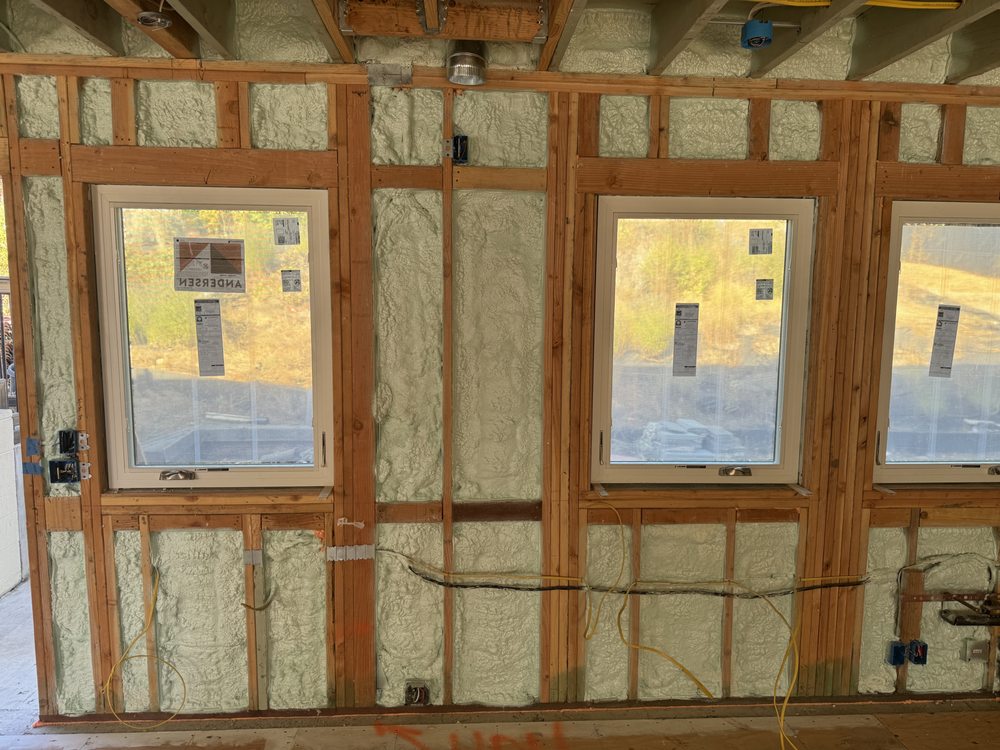
Heated detached garages are practically a hobby out here. Around Fargo-Moorhead, half the guys on the block have a shop where they wrench on trucks, run a woodworking setup, or just want a warm place to stand in December. And every one of them eventually asks the same thing: is it actually worth insulating? The honest answer depends entirely on one question — do you heat it, or do you want to?
Short version: If you heat your detached garage even occasionally, insulating it with spray foam is almost always worth it — a Fargo shop loses heat through the ceiling and walls faster than any space heater can keep up, so you’re burning propane or electricity straight into a Zone 7 sky. Air-seal and insulate with closed-cell foam to roughly R-49 in the ceiling and R-21 in the walls and the same heater will hold the space at a comfortable working temperature for a fraction of the run time. If you never plan to heat it, insulation buys you little — spend the money elsewhere.
When it’s worth it (and when it isn’t)
Insulation only pays back if there’s heat to keep in. So:
- You heat it now, or plan to: yes, insulate. This is the clearest win. An uninsulated 24x24 garage in a Fargo cold snap can shed heat as fast as a torpedo heater puts it out. Seal it up and that same heater cycles off and stays off.
- You want it to hold warmth overnight so it’s usable Saturday morning without a two-hour warm-up: yes. Foam’s air seal is what makes a space “stay” warm instead of dumping heat the second the burner shuts off.
- Cold storage only, never heated: probably not. Insulation doesn’t create heat. Put the budget toward an insulated overhead door or a better heater instead.
The Zone 7 numbers for a heated garage
Once you put a heat source in a detached garage, you’re functionally heating a building, and Climate Zone 7 targets start to matter. Realistic goals for a Red River Valley shop:
- Ceiling / roof: R-49 to R-60. This is where most of your heat escapes.
- Walls: R-21 or better — usually about 3 inches of closed-cell spray foam between the studs.
- Overhead door: an insulated door (R-12+). The door is almost always the weakest link, and no amount of wall foam makes up for a hollow steel door.
- Slab edge: R-10 perimeter foam if you’re pouring new — cold leaks out the slab edges into our frost-zone soil.
Why spray foam beats batts in a shop
A detached garage is a leaky, dusty, moisture-prone box, and that’s exactly where fiberglass batts struggle. Closed-cell spray foam wins here because it:
- Air-seals as it insulates. Garages have gaps everywhere — top plates, rim joists, around the door track. Foam closes them; batts leave them open.
- Handles moisture. Melting snow, a running engine, a kerosene heater — all add water to the air. Closed-cell doesn’t absorb it and won’t grow mold behind it.
- Doesn’t sag or get chewed up by mice, which are a real problem in outbuildings around Cass and Clay counties.
If your shop is a metal pole-barn style building rather than a stick-framed garage, the condensation math is a little different — we covered that in insulating a pole barn or shop in the Red River Valley. And if you’re weighing which foam to use, open-cell vs. closed-cell for a North Dakota building walks through it; for a cold shop, closed-cell is almost always the answer.
What it looks like around the metro
We insulate detached shops all over — Horace acreages with a heated hobby garage, Casselton farmsteads with a machine shop, in-town garages in Fargo and Moorhead that got finished off for a home gym or workshop. A typical job is spray the ceiling and walls with closed-cell, seal the perimeter, and flag the overhead door as the next upgrade. Cass County Electric and Xcel Energy have periodically offered insulation rebates worth asking about before you start.
The test is simple: if you’re paying to heat that garage, you’re paying to heat all of Fargo through its uninsulated ceiling. Request a free quote and we’ll walk the building, measure what’s there, and tell you honestly whether foam pencils out for how you actually use the space.