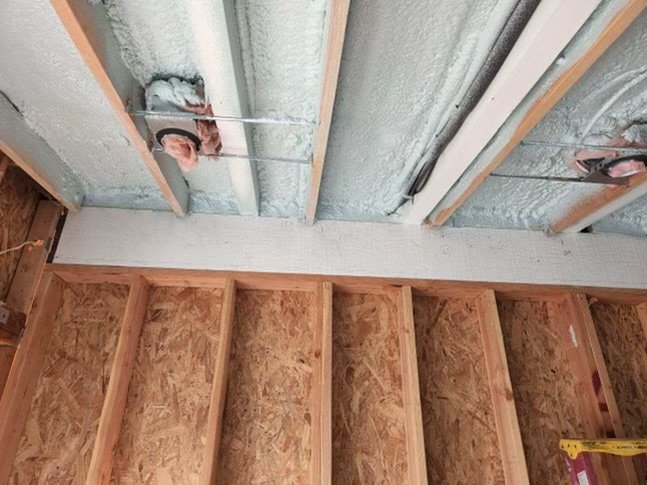
Ask an insulation nerd how much attic insulation a Fargo home needs and you’ll get an R-value. Ask a homeowner and they want inches — “how thick does the foam actually have to be?” Fair enough. Here’s the inches-first answer for our climate.
Short version: Fargo sits in Climate Zone 7, where the code target for attics is R-49 to R-60. In closed-cell spray foam (about R-6.5 to R-7 per inch), that’s roughly 7–9 inches. In open-cell (about R-3.7 per inch), it’s roughly 13–16 inches. On a roof deck, most Zone 7 jobs land at 5–7 inches of closed-cell — often paired with other insulation to finish the R-value — because the first few inches do the air-sealing and condensation-control work that matters most. Past the code target, extra inches keep helping, but the payback per inch drops fast.
Why the answer depends on where the foam goes
There are two very different attic assemblies, and the inch-count changes with each:
Insulating the attic floor (traditional vented attic): the goal is the full R-49–R-60 blanket between your ceiling and the cold attic above. If you’re doing it all in foam, that’s the 7–9 inches of closed-cell or 13–16 inches of open-cell from the short answer. In practice, many Fargo attics get a hybrid — an inch or two of foam to air-seal the ceiling plane, top plates, and wiring penetrations, then loose fill on top to reach the R-target affordably. The foam inches are doing the sealing; the fluffy stuff does the cheap R.
Insulating the roof deck (unvented “hot roof”): here inches matter for a second reason — condensation control. In Zone 7, the foam against the sheathing has to be thick enough to keep that sheathing above the dew point all winter, or moisture from the house will find the cold surface. That’s why closed-cell is the default against a cold-climate roof deck and why a skimpy “flash” coat is risky — the same dew-point math we walked through in our flash-and-batt comparison. Five to seven inches of closed-cell is the common Zone 7 roof-deck range; going unvented also means sealing the old vents, which we covered in does a spray-foamed attic still need ventilation?
Inches at a glance for Zone 7 (Fargo-Moorhead)
| Assembly | Foam type | Typical thickness |
|---|---|---|
| Attic floor, all-foam | Closed-cell | ~7–9 in. |
| Attic floor, all-foam | Open-cell | ~13–16 in. |
| Attic floor, hybrid (foam + loose fill) | Closed-cell seal coat | ~1–2 in. + loose fill to R-49+ |
| Roof deck (unvented) | Closed-cell | ~5–7 in. |
These are planning ranges, not quotes — rafter depth, existing insulation, and whether there’s HVAC in the attic all move the number. For the R-value math behind them, see our North Dakota R-value and code guide.
When more inches stop paying
Insulation has diminishing returns: going from 2 to 4 inches roughly halves the heat loss through that surface, but going from 8 to 10 shaves only a sliver more. In a -20°F January in Fargo or West Fargo, hitting the Zone 7 target absolutely pays — heating is most of a Red River Valley utility bill. But past R-60, your money usually works harder elsewhere: air-sealing the rim joist, the attic hatch, or bath-fan penetrations. The air seal is half of what you’re buying with foam in the first place; a thick attic over a leaky ceiling still frosts up and still feeds ice dams.
One more honest note: an installer quoting you a suspiciously thin layer — say, 2 inches of open-cell “because it seals” — isn’t getting you to code, and on a roof deck it’s a moisture risk, not a bargain. Thickness should be specified in inches, in writing, on the quote.
Get a number for your actual attic
Every attic in the metro is a little different — 1970s rafters in south Fargo, trussed lids in newer Horace builds, story-and-a-half homes in Moorhead with no attic floor at all. Our attic insulation work always starts by measuring what’s up there and telling you, in inches, what your roof or floor needs and why.
Want the exact thickness — and cost — for your house? Request a free quote and we’ll spec the foam depth for your attic in plain numbers, no guesswork.